Distress: A State of Danger or Desperate Need

Then they cried out to the Lord in their trouble, 
and he delivered them from their distress. 
(Psalm 107:6 NIV)

Bangert Island, February 2013

This morning, I flipped the calendar to a new month. Marking the days can be distressing, unless I look at the passing of time as a celebration. Today, I chose to celebrate. I wrote down the names of each month, then next to each month I wrote down major events. A lot has happened in 7 months. Later in the day, I realized I didn’t even write down a couple of them.

As you may have figured out by now, I also follow the church calendar. Right now we are in the midst of ordinary time, the time where we count our days until Advent, the next big season and one I have come to cherish each year. 

As I thought about this new month, I wondered if I should focus on a theme like I did last month, but nothing particular popped into my mind.  Most likely, I will write about my ordinary life. Like today’s adventure hiking at Bangert Island, with my friend Carol.

In February, I had hiked there was with my friend, Dawn, and the ground was covered with snow. We were going to meet for coffee, but it was a sunny day and she invited me to hike. We enjoyed a peaceful walk, while we talked. Our adventure refreshed our souls. 

Today on the spur of the moment, I invited Carol to join me at the park for our own little adventure. The scene gushed with green, the color of ordinary time. We walked and talked, catching up on each other’s lives. We remarked how much we both needed a little adventure, a break from the routine. We sat by the river and tried our hands at sketching the scene. After visiting for awhile, I suggested we take the longer route back. 

We had to climb over a fallen tree and mush through some mud. We lost our way for a while, as the trail became unreadable. We mostly laughed about it and then asked God to get us back to the path. In moments we saw the red ribbons tied to a tree. We made our way back to the defined path.

 We were almost to the end of our walk, when I stopped abruptly. 

A snake was coiled on the path before us. It didn’t look poisonous, and it was a very small, innocuous thing, but neither one of us wanted to step over him. (In our fright, we neglected to take a picture of the snake, which if you saw would make this story even more comical. But really snakes are not something I care to mess around with, let alone photograph.)

We looked for a way around him, but we were thwarted by poison ivy on both sides. We stood there for several minutes, unwilling to retrace our steps back or move forward. We tried throwing sticks at the snake; it wouldn’t budge. He just sat there flicking his tiny red tongue, staring us down. I told Carol, I really was paralyzed with fear. I just did not want to risk stepping over him. I cried a little prayer of distress to Our Father. 

We were about to take a running leap over the little guy, when I realized that I could call my husband and ask him for a way out of our predicament. He patiently listened, but I am sure he was shaking his head over my irrational fear of this baby snake. I told him it was small, but I didn’t want to risk the snake striking out at us. He suggested I take a long stick and poke the snake to get it off the trail. I hung up, found a stick and did what he said. The snake scuttled off into the underbrush. We were safe to resume our walk.

My spiritual takeaway from our adventure: Even the smallest of obstacles can paralyze me. But when I pray, God does indeed show me the way out. God is patient and understanding with my irrational fears. He gives me the courage to overcome them. And lastly, He doesn’t want me to journey alone. I am thankful for companions, He has provided to share in the adventure of life.
How are you celebrating ordinary time? 
What distress do you need God to deliver you from?
Taking it to a New Level

 
We’re depending on God;
    He’s everything we need.
What’s more, our hearts brim with joy
since we’ve taken for our own His holy name.
Love us, God, with all you’ve got—
that’s what we’re depending on.
(Psalm 33:20-22 The Message)
 
 
This week, I started out with a prayer asking God to “Save me from haste and confusion…”
 
After that prayer, confusion kept coming across my path. Both the actual word, and at times a sense of confusion about life. So, I looked up the word in the dictionary to ease my distress. The word “confuse” means “to bewilder, to mix up or identify wrongly or to make muddled or unclear.”
 
Confusion comes to my heart when I do not understand God’s will or direction, and especially when circumstances don’t make sense. 
 
I have been asking hard questions this week:
 
Why do two of my friends have to face the fear and uncertainty of health issues?
 
Why does another friend struggle with a sense of condemnation, when she is making a huge difference in the lives of many?
 
Why do I still sit around wondering what I should be doing with my life, when I have a recent degree in English, a self-published book and people who want me to share my writing, speaking and creative gifts with them, as well as plenty of time?
 
On Tuesday, I met with a group of spiritual leaders, where we were discussing spiritual growth and the catalysts that lead to a deeper relationship with Christ. Between my questions and the good dialogue at that meeting, I discovered something.
 
God wants to take us to a new level. He inviting us to bring our confusion, our fears, our doubts, our crises, our agendas, our gifts, our strengths, our weaknesses to . . .
 
a new level of dependence.
 
Dependence on Him. Dependence on His love and grace and strength.
 
Dependence. Will we accept His invitation?


Comfort: To Ease the Grief Of

 
Are the comforts of God too small for you,
or the word that deals gently with you?
(Job 15:11 ESV)
 

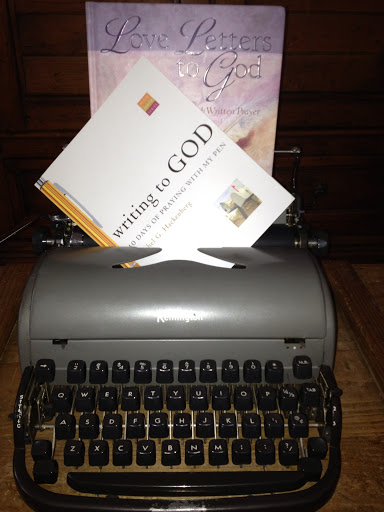
My reading list seems sparse this month. As I was looking at books for Lent, two titles caught my attention. One a familiar friend, the other a new acquaintance. Both books encourage writing as a way of prayer.


Love Letters to God: Deeper Intimacy Through Written Prayer (Lynn D. Morrissey)

This first book is beautiful like its author. I’ve read it once before, and consider Lynn a dear friend and person who has fueled my passion for journaling.

This book is more than a guide to writing your prayers to God, it is an invitation to rekindle your relationship with God as the Lover of our Souls. As I enter the pages and the stories of Lynn’s adventures with God, as well as her struggles, my heart finds rest and revival at the same time. My imagination is drawn to the garden of my soul, and I long to tarry in the presence of our Savior.

Today this line, prompted a prayer of examen: “Naming our grief is the first step toward healing.” That one sentence opened up a floodgate of griefs that I have been ignoring, afraid to name them for fear of being consumed by grief. The crazy thing is that the more I try not to name my griefs, the more they come out in anger and despair.

In my journal, I wrote: “My grief is . . . regret, dismay, denied, unrealistic, unnameable, transitional, disappointment based on sin, sorrow, sickness, separation and simple doubts about God’s goodness.” This simple act of confession brought to light what troubles me. I don’t have solutions, but expressing these on paper was the first step of reaching out to God for healing and comfort.

Writing to God: 40 Days of Praying With My Pen (Rachel G. Hackenberg)

I love the simplicity of this book. The prayers recorded in this book are poetic. They have inspired me to write poem prayers. Writing poetry takes my raging thoughts and distills them down into concise, raw expressions. When I read Rachel’s poem prayers and my own, I am drawn to some phrase that feeds my soul in the moment.

On the facing page of each prayer, she offers a prompt to read a Scripture and to contemplate a topic, which spurs me on to more written expressions of my heart.

In the poem, Nighttime Prayer, she explores her fear of the dark, which leads to her real fear–the fear of not being in control or able to stave off disaster that might come in the middle of the night. Early in the morning she laments, “Wide-eyed in case the uncontrollable, unthinkable happens/So I stay awake/Stay distracted/Determined not to be caught off guard by the night.”

Her prayer prompt for this entry explores fear: “Write a prayer about fear, and let the presence and encouragement of God surround you with holy comfort.”

Combining this reading with the quote from Love Letters about healing and grief, I noticed a connection between grief and fear.

I wrote: “My fear is . . . bound up in my grief. I fear failure, disappointing others, not keeping up, other people’s opinion of me, giving up on life, disappointing others’ expectations of me. I am afraid of depression, cancer, pain, failure, rejection, hope, renewal, new paths, success, criticism, praise, pride, the future, boredom, apathy, cynicism, nothingness, death, living, making mistakes. . .”

These confessions were random, yet real. Something about confessing these on paper enlarges my perspective.

My conclusion today was that I am powerless . . . and that’s a good thing to know and believe, because then I cry out, “I need you, Lord Jesus!”

And He comforts me.

Linking up with:

Bethlehem: Our Hopes and Fears are Met in Thee

Advent{ures}: Let’s Go to Bethlehem


Now in those days Israel had no king. There was a man from the tribe of Levi living in a remote area of the hill country of Ephraim. One day he brought home a woman from Bethlehem in Judah to be his concubine. ( Judges 19:1 NLT)

If I were the historian of Israel, the book of Judges would have been buried under a pile of dung or thrown into a fiery furnace. The book chronicles the downfall of Israel (you know, Jacob’s twelve sons, those who increased in number and were led by Moses out of captivity into the wilderness, and then led by Joshua into the promised land.) These characters rival the cast of a modern soap opera or mobster movie.
 
It’s easy to point the finger at them, but I do it warily, as I know that my deceitful heart has the potential for the same dark deeds, if given over to the folly of living my own way.

The last chapters of Judges (17-21) reveal some of the darkest and most foolish choices of the fractured tribes of Israel. They were living  in their own designated territory, with the tent of meeting in Shiloh, being their only common place to gather for worship. However, they tended to set up their own places of “worship” for convenience.

A man named Micah meets a young Levite from Bethlehem, who is wandering homeless around the wastelands of Ephraim. Seeing that Ephraim is so far from Shiloh, he establishes the young Levite in his home as his private priest. He even carves some figures to aid them in their worship.
Later the wandering Danites, who had failed to establish their God-given inheritance, covet Micah’s priest and idols. They abduct the priest and the idols, setting up their own town and their center of worship, disregarding the house of God over in Shiloh.

Mostly this little story reeks of foolishness, but the downward spiral continues.

Another Levite, from the outskirts of Ephraim takes for a “wife” a woman from Bethlehem. She runs away from him to return to her father’s home in Bethlehem. He follows her to persuade her to return to the wilderness with him, but her father counters his offer with food and lodging, keeping him delayed for about six days.
On the seventh day, the determined man loads up his belongings and his “wife” on two donkeys. They wander from town to town, not finding any suitable lodging. They refuse to stay in a foreign town.  Upon entering Gibeah, a town of Benjamin, no one offers them a room. They are shivering in the night air, when a hospitable man fearing for their safety in the open town square, invites them to his home.

They get settled in. The host’s fear comes knocking on the door. Some men of the city have arrived, looking for some sport. They want the Levite, but the host “graciously” offers his virgin daughter and his guest’s concubine. The men don’t want the women, and insist on having the guest. Finally, the guest “valiantly” pushes his concubine out the door. By the next morning, she has been raped and left for dead at the door of the host.

In fact, she is dead, so the Levite bundles her up and takes her back to their home, where he proceeds to cut her into twelve sections to send out to the twelve tribes, as a call to arms and revenge. (Who in their right mind would record this horrific event?) Yet, the writer of Judges has a point and inspired by the Spirit of God offers us a mirror into the depravity of a people and a nation without a king.

War breaks out among the tribes. After high casualties on both sides, the war comes to an end. The conquering tribes vow to never allow their women to marry a Benjamite. With the war over, their foolishness continues. In making the oath, they jeopardize the longevity of the tribe of Benjamin. They go through some convoluted reasoning to provide wives for the Benjamites, just so they don’t break their foolish oath. (You have to read it to believe it.)

The final commentary of the chronicler of Judges summarizes their demise (and seems fairly contemporary, if we were willing to look into our own mirror):
 

In those days Israel had no king,
so the people did whatever seemed right in their own eyes.
(Judges 21: 25 NLT)

 
Little hope surfaces in this dark passage of Israel’s history. God promised that kings would reign in Jacob’s future nation. And later Israel does ask for a king and a kingdom is established, but all this is just the backdrop of a better kingdom and the best King!

Don’t lose heart, there will be a light in the darkness. Tomorrow we will revisit one of the best loved stories in the Old Testament, which just happens to be set in our little town of Bethlehem.