Posture: The Attitude A Person Has Toward a Subject

Come, let us bow down in worship,
let us kneel before the LORD our Maker;
for he is our God
and we are the people of his pasture,
the flock under his care.

(Psalm 95:6-7 NIV)

What posture do you most often use when you approach God? I often sit in His presence. Kneeling, bowing and prostrating myself before Him are rare postures. I am expressive, so in worship I will raise my hands, but not everyone feels comfortable being demonstrative in these ways.

So why would we change our posture during our quiet time? I think the definition of posture gives us a clue. My attitude toward God can become casual, when I sit in my chair day after day. But when I change my posture, I have to think about the position and how I am presenting myself before God. Kneeling, bowing, opening my hands in surrender and laying myself out flat before God, each represent various levels of humility. I find that kneeling tends to make me feel more serious before God. 

In some of my most desperate times I have placed myself flat on the floor, just being still before God, especially when I don’t have the words to pray.

Pam Farrel asserts “Praying in a position that is not the norm for you can change your heart, not just your body position.” 

©Pam Farrel from 30 Ways to Wake Up Your Quiet Time (IVP). For more devotional books by Pam http://www.Love-wise.com


How do you think your posture changes your heart? Do you find it difficult to change positions before God? Are you willing to take the lower position to give God the higher glory?


Linking up with Soli Deo Gloria Party

Legacy: A Gift By Will

The grass withers and the flowers fall,
but the word of our God stands forever.
(Isaiah 40:8 NIV)


What does it take to leave a legacy? First, you must have something to leave behind. Second, it is beneficial to have a legal will. Yet, the most needed thing is a willingness to give it away. As we quiet our hearts before God, we not only benefit ourselves, we also are impacting others with a spiritual legacy.

A tangible way to share this legacy is to be present with others. To offer to be in God’s presence with them in your every day, ordinary life. We can extend prayer for others while we are in our own solitude and we can petition God together in community.

One of the many gifts God gave to us is the written Scriptures. I used to love learning Bible stories in Vacation Bible School. And as a teenager, we had youth leaders who encouraged us to read the Bible to get to know God more. I even remember my first quiet times spent in the attic space off our bedroom, which my sisters and I made into a secret hideout. I would climb in that space with my Bible, a little quiet time notebook and my heart open to God. I would read a short passage of Scripture and write down a phrase that I liked, along with a prayer back to God about the verses.

Spending time in God’s word became a sacred memory, that grew out of a willingness to set aside  the time and space, which I could have filled with other activities.

Today, in 30 Ways to Wake Up Your Quiet Time, Pam Farrel reminds us that we can leave a spiritual legacy for others. Most times, I think that my quiet time is for me, but what a wonderful gift to give to others, by spending time in God’s presence praying for and contemplating Scripture for someone else. 

Pam suggests this idea, which may take a commitment of your will to accomplish, but would be well worth it. (I have not done this myself, but I am asking God to give me one person to do this for as a special gift, as a legacy to encourage their spiritual growth.)

Here’s the idea: 

Try reading the Bible through  and marking it up to give as a gift . . .point out the verses that you think would encourage or strengthen [another person] . . . by highlighting, underlining and writing notes in the margin. Recall verses that helped you choose a career . . .or navigate a significant transition. (She asked one son to give titles to the Psalms; for another she wrote titles for each chapter in the book of Ruth with observations or questions for the son to contemplate.)

Pam did this for each of her three boys. She doesn’t say how long it took her, but what a gift! Here’s how this gift of time and love impacted her quiet moments:

As I read through the Bible for my three sons (one Bible for each son), I gained a new appreciation for Scripture. I valued my time in the Word more because not only was I growing as an individual, I was building a legacy.

©Pam Farrel from 30 Ways to Wake Up Your Quiet Time (IVP). For more devotional books by Pam http://www.Love-wise.com
As I look at the magnitude of this gift, I think I could never do it. I would have to adjust my expectations and dedicate my Bible reading to mostly preparing the gift Bible for the recipient. I think it would be an interesting way to invest my time with God and for the other person. 

If going through the whole Bible seems like too much, brainstorm with God for other creative ways to leave a Scriptural legacy for someone special in your life. Maybe a journal with special verses that you are praying for them or a scrapbook with pictures and favorite verses to encourage them at a certain season of life or on a special occasion. 
Have you ever had anyone leave you a spiritual legacy? 
If so, how has it impacted your life?


Here’s another creative way to leave a Scriptural legacy that I read about over here. This is the second time recently that I have heard about Journibles. My friend, Lynn, directed me to Healthy Spirituality by Jean Wise, who also reviewed the Journibles. And today my friend, Kelly, showed me the post at New Nostalgia.

Victory: The Overcoming of an Enemy

If we claim that we’re free of sin, we’re only fooling ourselves. A claim like that is errant nonsense. On the other hand, if we admit our sins—make a clean breast of them—he won’t let us down; he’ll be true to himself. He’ll forgive our sins and purge us of all wrongdoing. If we claim that we’ve never sinned, we out-and-out contradict God—make a liar out of him. A claim like that only shows off our ignorance of God.
(1 John 1:8-10 The Message)


What is the main enemy of quiet? What robs us of a calm, unwavering faith?

 The psalmist warns,
 “If I had cherished iniquity in my heart,
the Lord would not have listened. ” (Psalm 66:18 ESV) 

Cherishing sin over  God makes for  very quiet, quiet time. If  sin prevents communication between us and God, then seeking reconciliation through confession and trusting God’s forgiveness is paramount.

It’s easier for me to focus on emotion filled praise sessions and passionate intercession, than quiet, simple confession of my weaknesses, my faults and my sin tendencies. 

Time after time I have read that confession heals, but do I practice this discipline? Not often enough. 

Today, I am going to share Pam Farrel’s ideas about dealing with our “dark sides.” She gives us some practical techniques and principles for victory:

To win a victory over the dark side [our weaknesses and our sin nature], we must be very deliberate. Make a list of weaknesses, then go to the Bible to find verses to equalize your life. 

Here’s an example from the book:

[Her] list of weaknesses included fear, feeling inadequate, feeling stupid, feeling overwhelmed . . . Next to each weakness she listed traits of God that can counter the weakness. For example, next to “stupid” she wrote “all-knowing mind of Christ.” Next to “overwhelmed” she wrote “able.” Next to “inadequate and spineless” (she was hard on herself) she wrote “adequate, strong, fortress.” By using a good concordance she located verses that included those key words. 

Pam offers this technique to deal with nagging guilt:

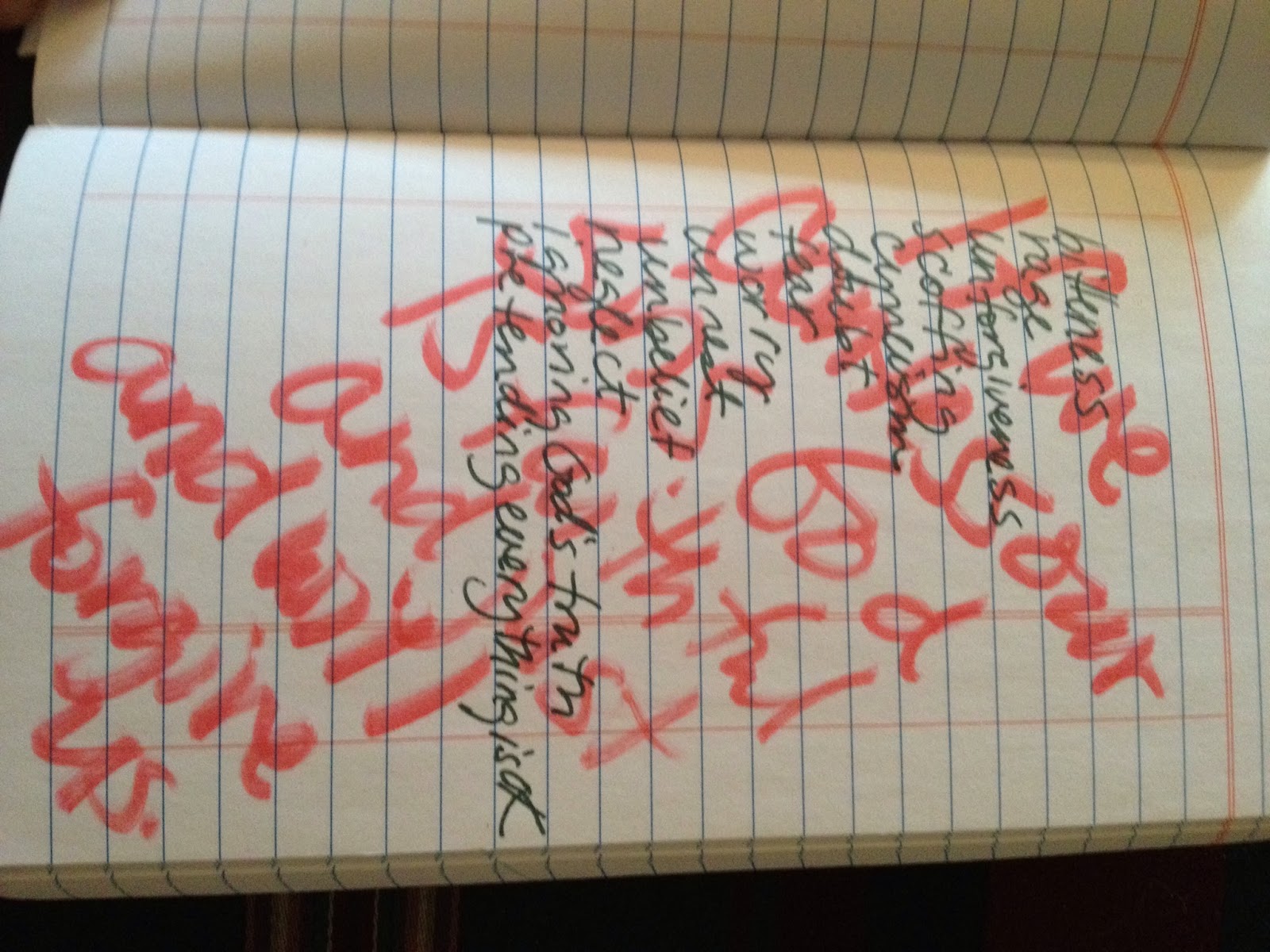
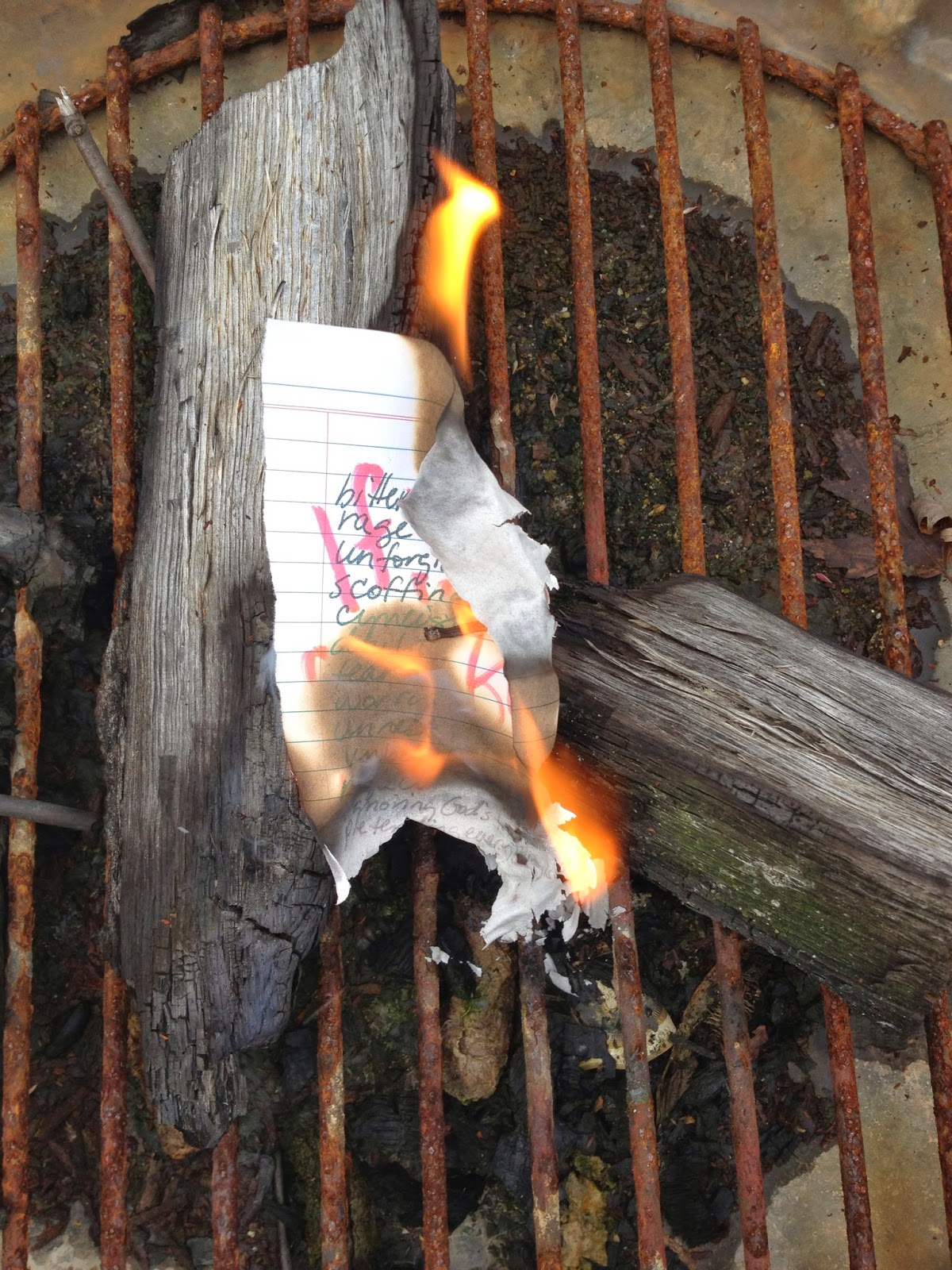
Write all those nagging sins down, then write the test of 1 John 1:9 over it–right over the top, ink over ink! This creates a picture of how God blots out sin. You may then want to destroy the list. (A fireplace can come in handy here.) It is such a relief to see that all our ugly thoughts and selfish actions are cremated by God’s powerful love.

©Pam Farrel from 30 Ways to Wake Up Your Quiet Time (IVP). For more devotional books by Pam http://www.Love-wise.com

It felt so freeing to see my sins covered by God’s word and then burned up by His “powerful love.”
If you don’t have a concordance  to look up more victory verses, you can look up Scriptures online for free at www.biblegateway.com. Once you gather them, write them down to post around your house or in your car to help you to combat the darkness with the light saber of God’s love and forgiveness.

Which Scripture will you post to combat the darkness?


Dance: To Move Your Body

Let them praise his name in the dance: 
let them sing praises unto him with the timbrel and harp.
For the Lord taketh pleasure in his people: 
he will beautify the meek with salvation.
(Psalm 149:3-4 KJV)


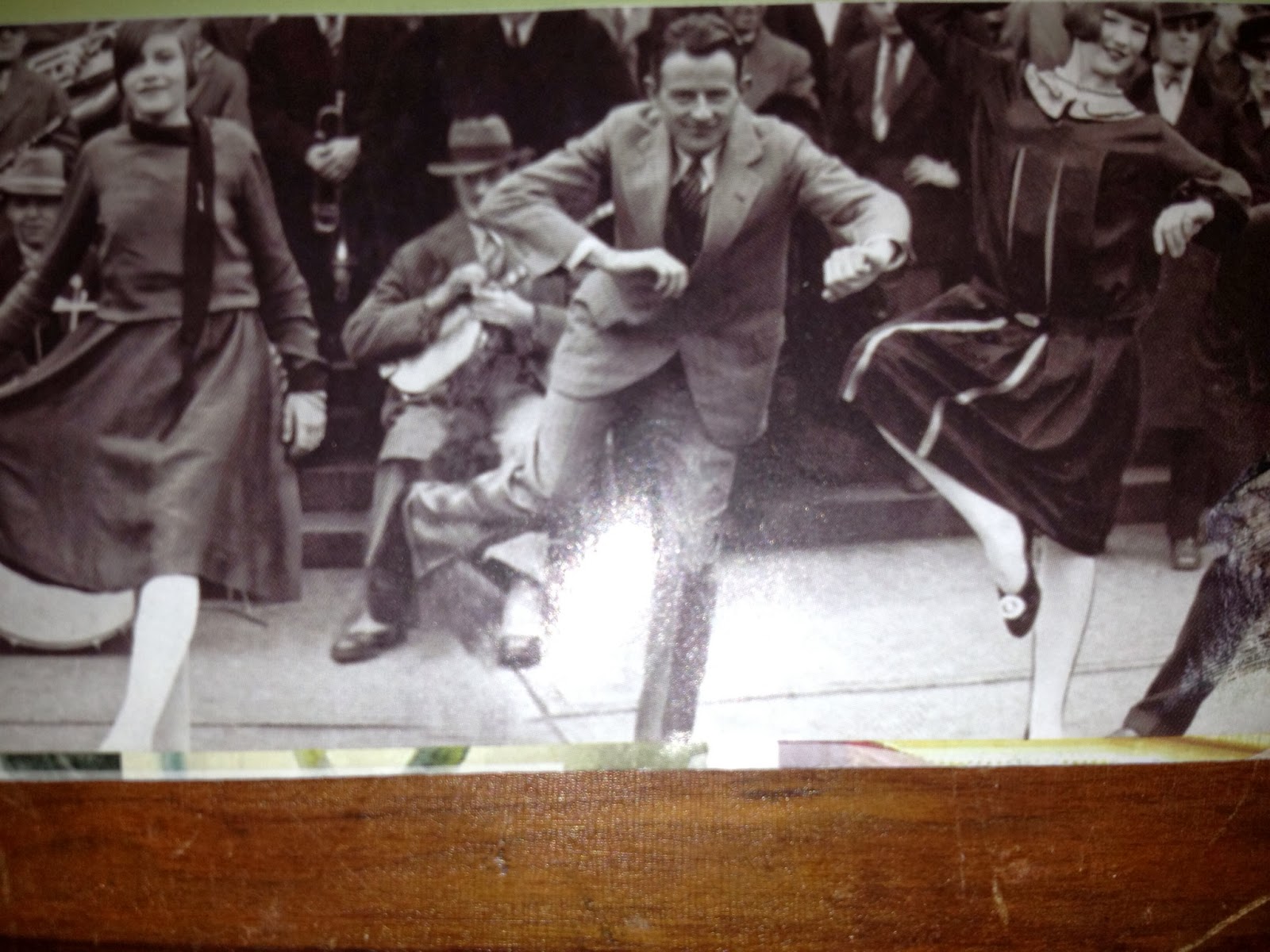
This old photo was on some mail I got from the St. Louis History Museum,
 thought it fit well with our theme today.
 It was either this or a video of me dancing! I figured you’d prefer this!

Dancing may be the last thing on your mind when you think of quiet. If you have no rhythm, like myself, you may  want to skip this idea completely. But even as I admit that I am rhythm deficient, I still like to dance unto the Lord! I love to crank up the praise music when no one is home and just move as the Spirit leads. But dance is not the only kind of movement that draws us closer to God. 

Scripture often likens our relationship with Him as a walk or even a race. I think dancing, walking, running or any exercise can give us a focus that clears our minds, placing us in a posture for deeper listening to God.

Pam Farrel agrees. Listen in as she relates her experience with dance and exercise as means to connect with God in the quiet of our hearts. (If you are kinesthetic learner, you’re gonna love this. If you’re not, you should still give this idea a try. See if God shows up in a way you never experienced before!)

Pam does admit that she is a trained dancer and gymnast, but still there is value in trying a new experience even if you’re not an expert:

I took a Jewish folk-dance class and the holiness of dance became real to me. As the teacher explained the meaning of the dances and their steps, I began to grasp the full picture of God’s plan. One dance had a step for water . . . I thought about how Jesus said, “I am the living water.”

At the moment my feet were moving to the music and doing the steps  that meant water, I knew that for me the living water is what I needed for survival . . . I had intellectually known that for years  and years, but in that moment my whole body could respond to the truth of that one simple phrase in Scripture.

If dancing doesn’t appeal to you, try taking a walk or jogging with praise music or riding your bike with the intention of listening to God.

Pam shares some research and  her experience with exercise:

Professional counselor Earl Henslin says that often it is after intense exercise and rest that our minds think clearest. I also have seen that I am most creative after I have exercised and prayed. It is as if those two activities serve as an eraser on the chalkboard of my life, wiping away the superfluous noise of busyness.

©Pam Farrel from 30 Ways to Wake Up Your Quiet Time (IVP). For more devotional books by Pam http://www.Love-wise.com


Can you share a time when physical activity 
helped you to connect with God?

Correspondence: A Direct Relationship To or With

Then He who sat on the throne said,
“Behold, I make all things new.” 
And He said to me, 
“Write, for these words are true and faithful.” 
(Revelation 21:5 NKJV)


God is in the process of making all things new. This was such an important concept, He directed John to write it down, letting us know that God’s word is faithful and true. A crucial aspect of our relationship with God is reading Scriptures. He uses correspondence to communicate with us about His relationship with all of creation.

The Bible doesn’t specifically say whether anyone kept a diary or journal, but several times God invites His prophets and scribes to write down a message. I believe writing things down can transform us. So, I keep a journal. And I find this practice one of the most beneficial means of connecting with God. 

Not everyone embraces this practice, yet I think writing your prayers of various kinds, your responses to God’s word and even questions that you ponder are great ways to experience God’s presence. Another benefit of a journal is having a written account of your journey with God.

Pam Farrel explains how this practice enhanced her quiet times:

I remember the encouragement to to close down the windows  of responsibility of my life just like we close down the windows on our computer programs. As I slow down . . . I then find I have better reception to what God is saying. Sometimes I do this by freewriting in my journal, logging random thoughts as they enter my mind. I record turns of phrases, poems or emotions as I need to release them from the confines of my heart. I find that if I close down my frenzied activity, I have much I want to journal back to him!

©Pam Farrel from 30 Ways to Wake Up Your Quiet Time (IVP). For more devotional books by Pam http://www.Love-wise.com


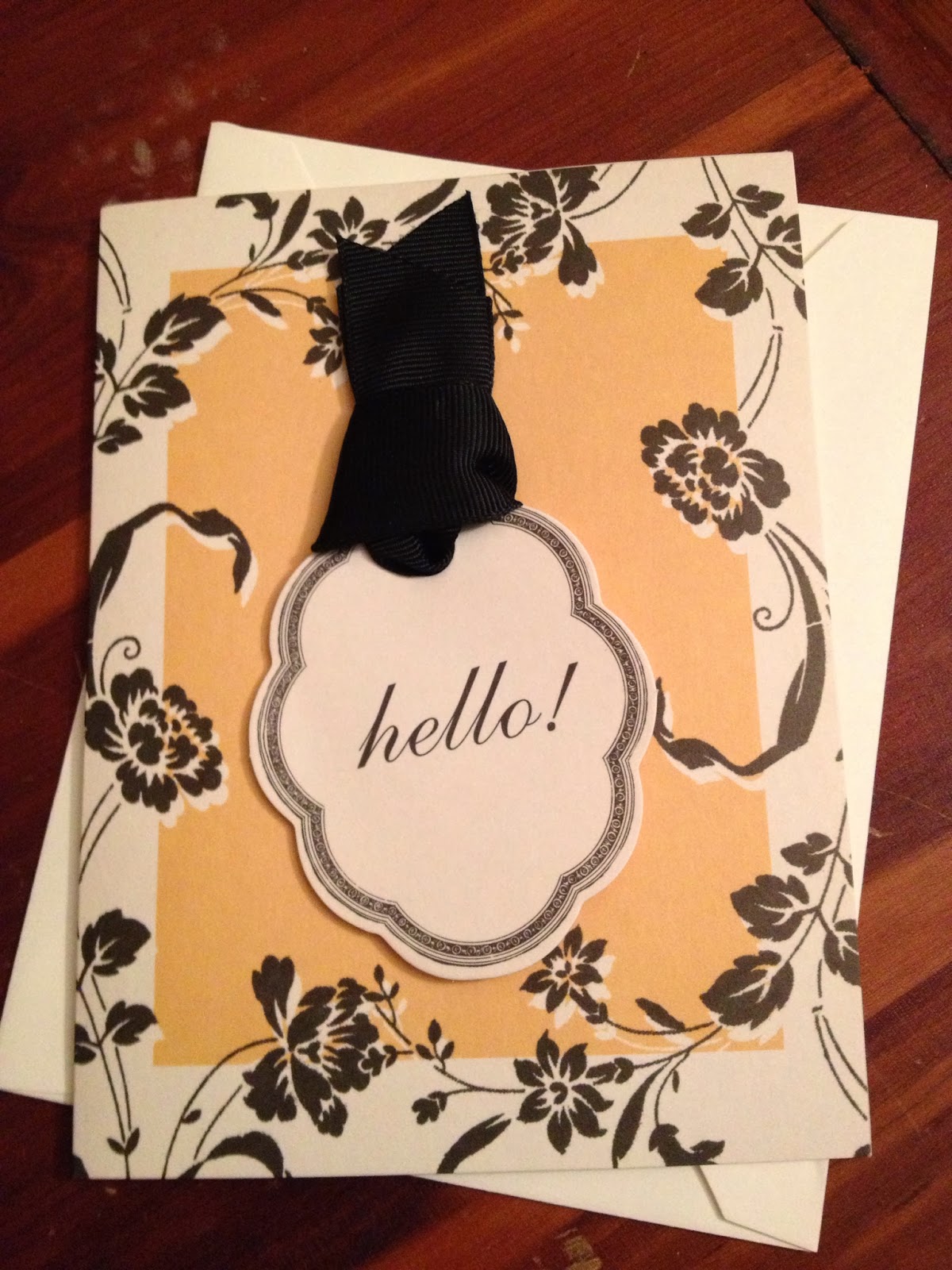
If you find it hard to journal, why not just start with Dear Jesus . . . or Hello! Write a short note to God or lavish Him with a love letter written in long hand or type Him a missal on your computer. God loves to hear from us whether it’s through mental, verbal or written expression.
What benefits have you experienced while keeping a journal? Have you ever thought of the Bible as God’s journal? If so, how would thinking of the Bible in this way effect
 the way you read it?
Linking up with Random Journal Day