Need: A Lack of Something Requisite, Desirable or Useful

For the bread of God is he who comes down from heaven and gives life to the world.
(John 6:33 NIV)


When we get to this familiar request in the Lord’s prayer, we are halfway through the recitation. It is the most practical and basic of requests. Yet the surrounding thoughts feed through this request. 

We make our daily request based on the knowledge of God as our Father. We can depend on the promise of provision as it is His will to provide for us. And when He grants this request, we have everything we need to hallow His name and our lives. Once we have experienced His provision, we seek the deeper spiritual needs: asking for and offering forgiveness and requesting the way out of temptation.

The significance of this simple request becomes clearer, if you dig into the original language. When Jesus spoke, he used the local dialect–Aramaic. In Aramaic, this sentence translates roughly to this: “Give to us today, this very day, the bread of our need.”

Bread is a basic staple of most diets. To meditate on the bread of our need, takes me back to the Old Testament and then directly to Christ as the fulfillment of the promise. In Old Testament worship, they placed the Bread of Presence on the altar before God. During the wandering desert days of the Israelites, God sent down b read (manna) from heaven to meet their daily need for sustenance.

Jesus is our our daily bread. The bread of our ultimate need is salvation. Jesus satisfies this need completely. To know Jesus is to have everything requisite, desirable and useful, in order to relate with our Father in heaven.

During the sacrament of communion, we eat bread to recall Jesus’ broken body on the cross, broken on our behalf. A friend recently pointed out that the phrase, “Taste and see that the Lord is good,” takes on a richer meaning for her, whenever she partakes of communion. As I put together her insight and the daily “breadness” of Jesus, I rejoiced in the goodness of God. The rest of the verse (Psalm 34:8) states: “Blessed is the one who takes refuge in him.” I marveled at how these mixed metaphors of bread and refuge give me something more to chew on. 

To dwell within God’s presence is our daily benefit. So by all means, let’s ask “Give us this day our daily bread, our daily refuge, our daily need, our daily portion of goodness.” 


What comes to mind, when you pray, 
“Give us this day our daily bread”? 
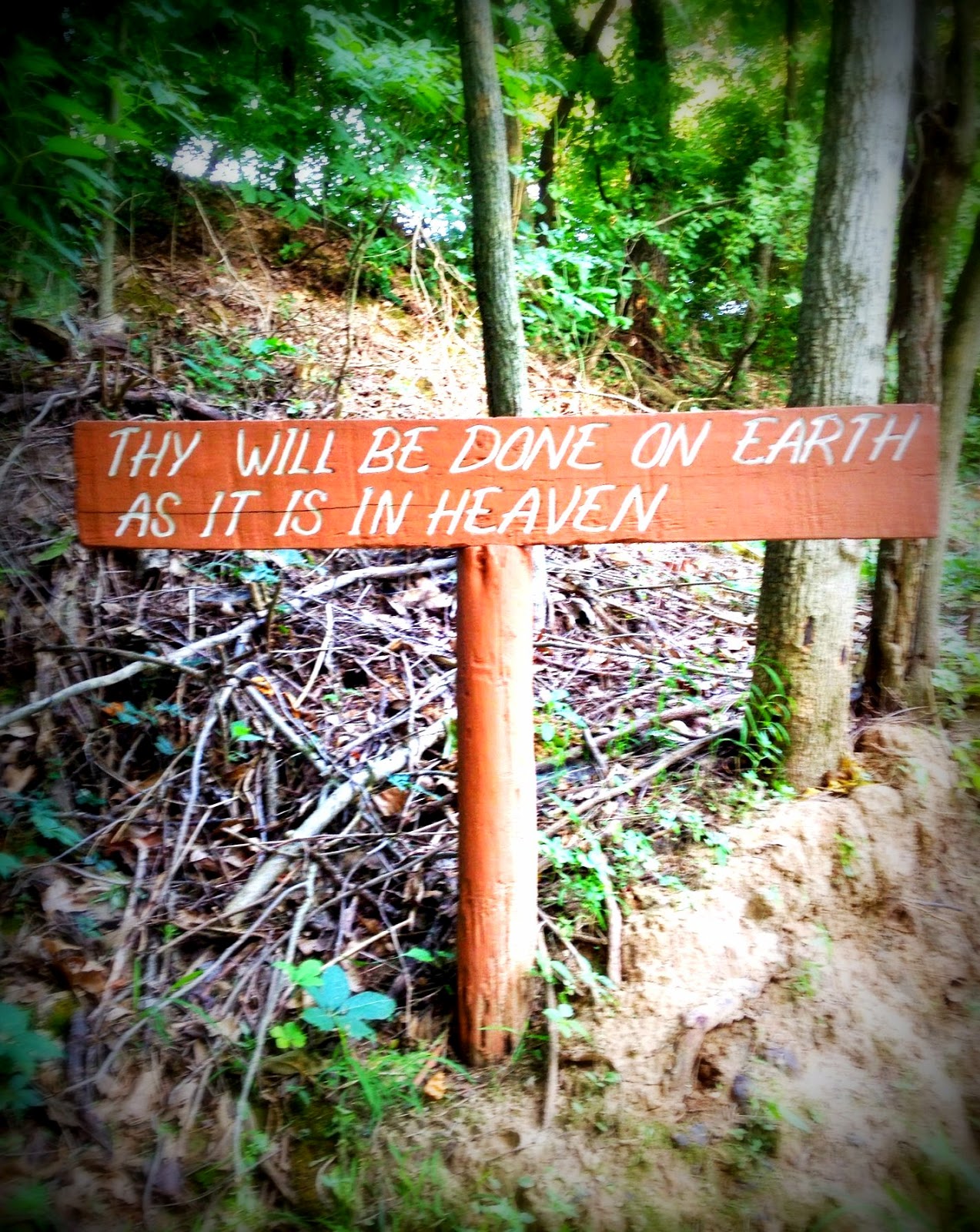


Teach: To Accustom to Some Action or Attitude

Now Jesus was praying in a certain place, 
and when he was finished, one of his disciples said, 
“Lord, teach us to pray . . .”
(Luke 11:1 ESV)


When I think of written prayer, the most famous one that comes to mind is “The Lord’s Prayer.” This prayer brings comfort to many around the world daily, as it is recited in unison. It is familiar to both religious and secular people.

In Luke’s gospel the prayer is recorded as a response to one disciple’s request: “Lord, teach us to pray.”  The disciple made his request after he had witnessed Jesus praying. Jesus modeled prayer. And He gave us a written prayer to reference as a teaching guide. 

Each line is full of instruction and affirmation of what it means to pray, to ask in faith based on our relationship with God. This first phrase is full of love and belonging. Jesus doesn’t teach us to pray to His father, but to our inclusive Father. 

He tells us where our Father dwells. He is of heaven, a place beyond us, yet the unseen One makes Himself known to us through His Son. And through this very Son invites us to beseech Him as Father. A Father who intimately loves us and knows our words before they even form on our tongue. 

To simply meditate on this one line of the prayer evokes the attitude of a contented child. To act upon this hope of heaven and to respond to the Father who loved us enough to send our eldest Brother to embody this truth, births in me a desire to love God.

No wonder the next line is “Hallowed be thy name!”


How does it feel to know that God is our Father? How does this truth affect your attitude or direct your actions?


Ignite: To Set in Motion; Spark

The apostles said to the Lord, “Increase our faith!”
(Luke 17:5 NIV)

The cry of the apostles sums up my petition for myself these days. I need faith. Sometimes it is hard to believe God is good. Often life confuses and obscures what I think I want or need. Sometimes life feels downright unfair. Dark and gloomy doubts begin to whisper to me. And I begin to believe God doesn’t care after all.

This quote caused me to pause and think more deeply about God:

God is subtle, but he is not malicious.
 (Albert Einstein)

I am still mulling it over. It is obvious that God is not malicious, but how often my griping and complaining cloaks my fear that God may be ambivalent. To think of God as subtle brings me strange comfort.

When I make requests of God, I expect answers, because He promises them. But sometimes, the answers are nuanced in ways that leave me raw and wondering. Other times, I get it. I feel like I hear Him directing and saying, “That’s it! Go that way! You’re listening now!” But either way, He is present. And He wants me to know, He is near. He is with us.


A conversation with God can ignite a lot of questions. Crackling like a campfire, talking with God sets into motion more mystery than I can bear at times. I have to step away from Him, just like when I stand too near the blazing bonfire on a summer night to get some relief from the heat.

As the fire burns down, I move closer again and I’m comforted in the presence of the glowing embers. The sparks sputter into the sky, and I wonder whether God catches them in the dark. In the dark, our faith grows into more faith, settling our hearts with His warm embrace.


Spirit of God, spark our faith, hope and love into new action each day.
Fill our lives with wonder and awe in your presence . . . (Roman Catholic)


In what ways do you experience God as subtle?

Confidence: A Relation of Trust or Intimacy {Where I Reveal My Dream Come True}

 
But know that the LORD has set apart the faithful for himself;
the LORD hears when I call to him.
(Psalm 4:3 NRSV)


When I was a teenager, during a youth retreat we were encouraged to choose a name that would describe who we wanted to become. I chose the word, “confidence.” I drew a key and wrote the word across it. Probably the first time I ever used a concordance to look up Scriptures. Under the listing, I remember reading: “The LORD is my confidence.” (Proverbs 3:26a)

At that retreat was one of the first times I asked God for something for myself. I wanted Him to be my confidence, but also to make me more confident.

For many years I have been growing into that name. As I  was getting ready for a new venture today, God reminded me of that act of faith so many years ago. Back in May, through a series of God events, I took a step towards fulfilling a dream. This dream came to life today! I am calling this dream:


(Logo design created by Jessie Flori)


Souldare will be a place where people gather together to discover their created self through journaling, collage art and eventually, nature hikes accompanied by times of contemplative prayer.

What does this post have to do with my recent series on prayer? God hears when we call to him. And sometimes, the answer is revealed in stages, over the years. And sometimes, He uses that very request to increase our faith and confidence.

When I look at the word confidence, I think “with faith” or “with fidelity,” which when applied to my life humbles me. To think that God would call me one of his faithful ones exalts his faithfulness. It indicates a depth of intimacy with God that has grown sweeter over the years.

What a joy it was today to witness others exploring and discovering their created selves through collage art and journaling. God was in our midst. I can’t wait until next week to see how God reveals himself to us again.


A poem I read before I left to facilitate the workshop became another prayer for confidence:

Where fear imprisons, faith liberates;
Where fear paralyzes, faith empowers;
Where fear disheartens, faith encourages;
Where fear sickens, faith heals;
Where fear makes useless, faith makes beautiful;
Where fear puts hopelessness at the heart of life,
faith opens the windows on a new world,
a new life that knows no end.
(Father Philip Chester, as qtd by Jonathan Aitken in Prayers for People Under Pressure)


How is faith enabling you to overcome fears?What long forgotten request
is God answering today?